

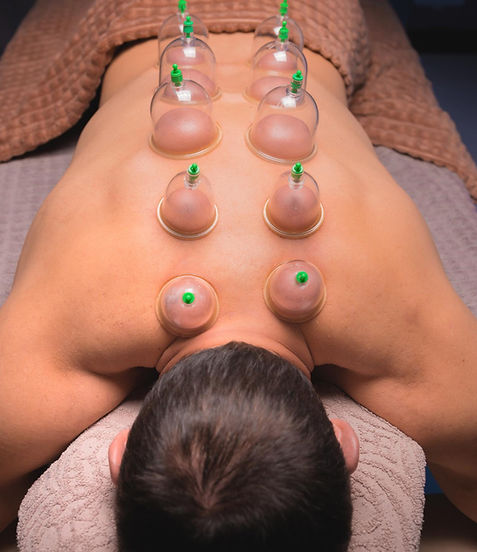
Wet cupping ( Hijama )
Hijama, commonly known as cupping therapy, is a traditional practice with a long history across many cultures. The term Hijama comes from the Arabic root al-hajm, which refers to drawing or extracting.
Historical records show that cupping was used in ancient Arab, Egyptian, Chinese, Greek, and Asian civilisations as part of early wellness traditions long before the development of modern healthcare systems.
In Islamic tradition, Hijama holds special significance due to its mention in the Sunnah. Over time, the practice has continued to evolve, with modern clinics focusing on hygiene, professionalism, and client comfort while respecting its historical roots.
Today, Hijama is offered as a complementary wellness practice, carried out in controlled, clean environments and chosen by individuals seeking traditional approaches to wellbeing.
Wet cupping ( Hijama )
Hijama, commonly known as cupping therapy, is a traditional practice with a long history across many cultures. The term Hijama comes from the Arabic root al-hajm, which refers to drawing or extracting.
Historical records show that cupping was used in ancient Arab, Egyptian, Chinese, Greek, and Asian civilisations as part of early wellness traditions long before the development of modern healthcare systems.
In Islamic tradition, Hijama holds special significance due to its mention in the Sunnah. Over time, the practice has continued to evolve, with modern clinics focusing on hygiene, professionalism, and client comfort while respecting its historical roots.
Today, Hijama is offered as a complementary wellness practice, carried out in controlled, clean environments and chosen by individuals seeking traditional approaches to wellbeing.
Wet cupping ( Hijama )
Hijama, commonly known as cupping therapy, is a traditional practice with a long history across many cultures. The term Hijama comes from the Arabic root al-hajm, which refers to drawing or extracting.
Historical records show that cupping was used in ancient Arab, Egyptian, Chinese, Greek, and Asian civilisations as part of early wellness traditions long before the development of modern healthcare systems.
In Islamic tradition, Hijama holds special significance due to its mention in the Sunnah. Over time, the practice has continued to evolve, with modern clinics focusing on hygiene, professionalism, and client comfort while respecting its historical roots.
Today, Hijama is offered as a complementary wellness practice, carried out in controlled, clean environments and chosen by individuals seeking traditional approaches to wellbeing.